
How are fonts 'hidden' in PDFs? Why can they sometimes be extracted and sometimes not?
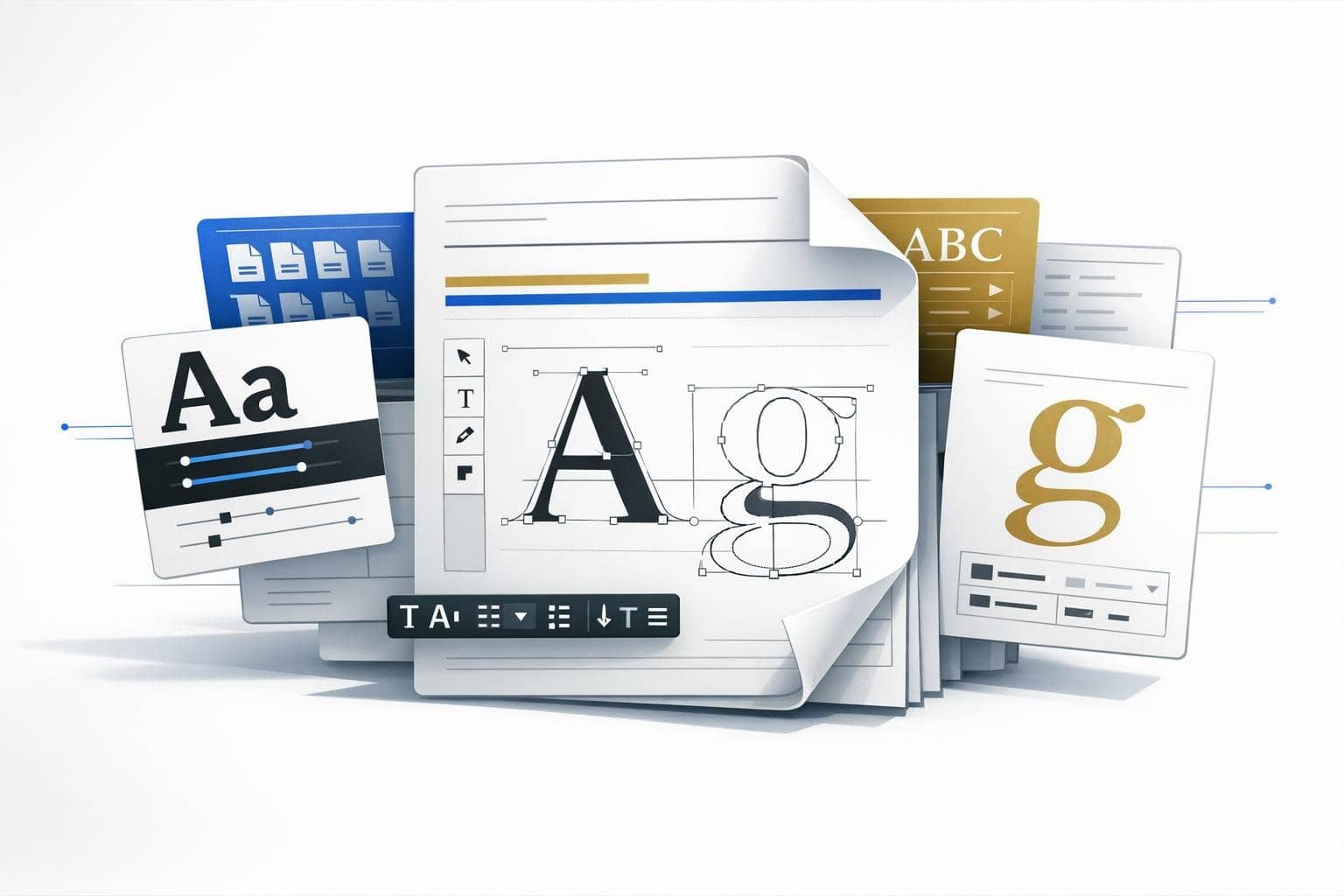
Many people think PDFs simply 'flatten the page into an image,' but that's not actually the case. For digitally native PDFs, text, images, paths, and fonts typically exist as structured resources. Because of this, many PDFs can directly recognize and even export font resources, instead of merely relying on visually guessing which font it might be.
This is why PDF font extraction tools have real practical value. These tools don't 'guess what fonts the page uses'—instead, when possible, they directly identify and export the actual font resources embedded within the PDF.
Quick answer: Why can fonts be extracted from PDFs?
Because many PDFs embed fonts within the document to ensure consistent layout and formatting when opened on different devices. As long as the font resources haven't been completely stripped away, tools can identify, preview, and even export them.
What are 'embedded fonts' and 'font subsets'?
-
Embedded fonts The complete or partial font file packaged into the PDF.
-
Font subset Only the characters actually used in the document are retained, reducing file size.
Font subsets are very common in PDFs, which is why you can sometimes extract fonts, but what you get isn't the complete font library—it's a version containing only a subset of characters.
Why would someone need to extract fonts from a PDF?
- To confirm what fonts are used in a design mockup or report
- To reuse embedded font resources from a document
- To check whether the font has complete character coverage
- To troubleshoot printing, export, or display issues
What's the difference from 'font identification'?
Font identification typically involves analyzing the page appearance to guess 'what font it looks like'; while font extraction is more about directly seeing what font resources are actually embedded in the PDF. Both needs exist, but extraction usually gets closer to the source of truth.
Who needs to understand this distinction most?
- Designers who want to reuse fonts from design files
- Front-end developers aiming to accurately reproduce web or layout effects
- Layout specialists who need to verify font licensing and coverage
- Individuals managing historical documents and brand assets
Why is local processing more important?
PDFs like design mockups, contracts, proposals, and prospectuses are likely to contain sensitive content. If you just want to know what fonts are used, uploading the entire document to a third-party server comes at a significant cost. Tools like O.Convertor's PDF Font Extractor process everything directly in your browser, making them more suitable for privacy-sensitive scenarios.
Common Questions
1. Can complete fonts be extracted from all PDFs?
No. Some documents only have embedded subsets, and some don't even have complete font resources embedded at all.
2. Can extracted fonts always be installed and used directly?
Not necessarily. It depends on the font format, completeness, and licensing.
3. Why is font extraction helpful for design and typography?
Because it helps you verify the actual font resources being used, rather than just guessing based on how the page appears.
If you want to inspect embedded PDF fonts, confirm glyph coverage, or directly export usable font resources, you can try the O.Convertor PDF Font Extraction Tool. If you’re more interested in the practical steps to identify what font a PDF uses, you can also check out How to Identify Fonts in a PDF.